I walked into L'Atelier de Chef Laurent on a Monday morning convinced I was a good cook. By Tuesday afternoon, I was seriously questioning whether I knew how to boil water.
This isn't a story about a picture-perfect cooking vacation. This is about the most frustrating, rewarding, ego-destroying week of my gastronomic life. And why I'd do it again in a heartbeat.
Why Not the Famous Schools?
Everyone asks about Le Cordon Bleu. Yes, it's legendary. Yes, the kitchen tours are impressive. But here's the thing — Le Cordon Bleu is designed for aspiring professionals willing to commit months and tens of thousands of dollars. For someone who just wants to cook better at home? It's overkill.
I found L'Atelier de Chef Laurent through a recommendation from a restaurant owner in Lyon. "If you want to actually learn," she said, "go see Laurent. He used to be a monster at a two-star place. Now he teaches small groups and actually cares if you improve."
The school operates out of a converted space in the 11th arrondissement — not the tourist-friendly areas, just a regular Parisian neighborhood. Six students maximum per week. Real professional equipment. A chef who has exactly zero patience for pretense.
Day One: The Onion Incident
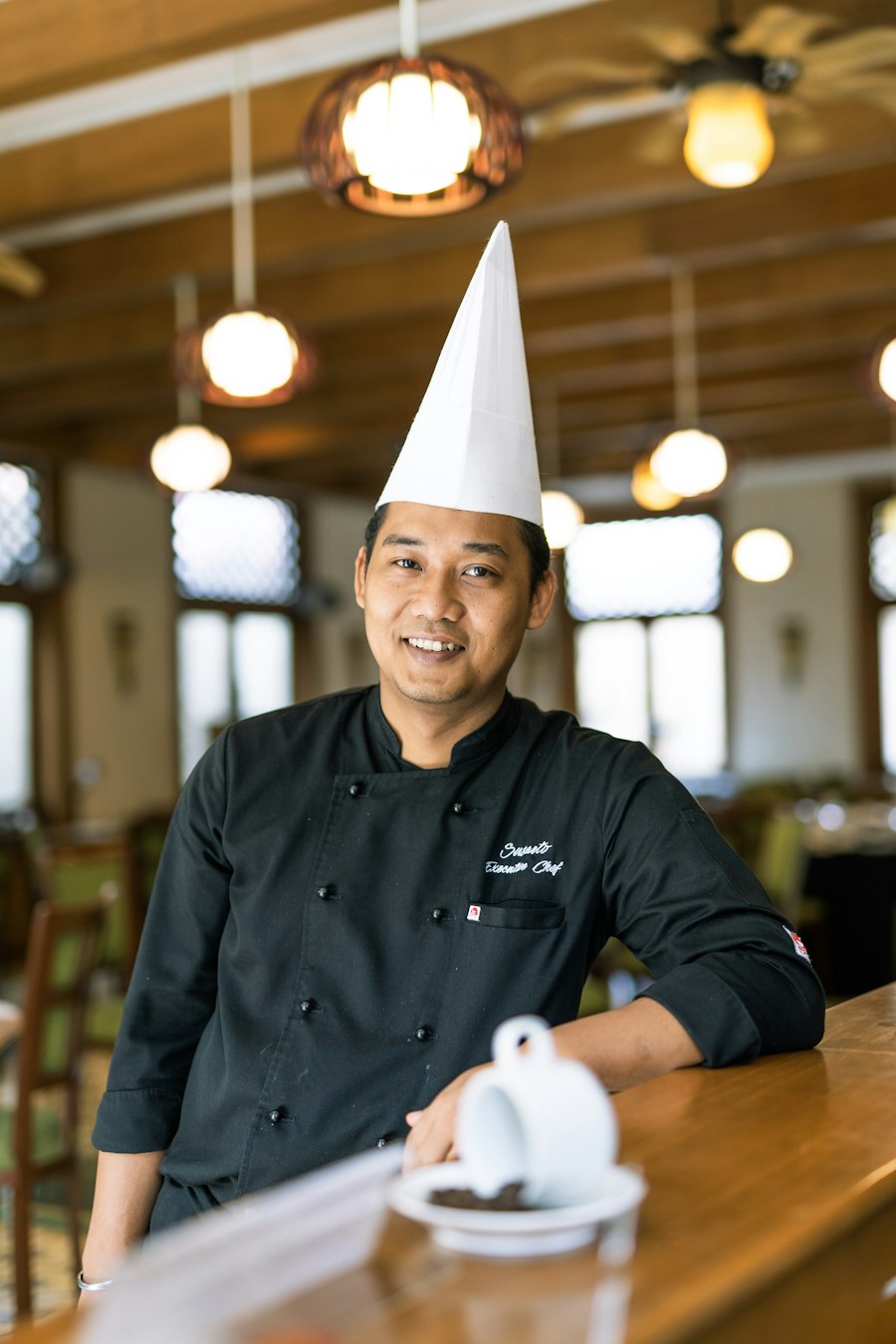
Chef Laurent is 52, with the kind of calm intensity that comes from decades of high-pressure service. He speaks English when necessary, French when frustrated, and communicates most eloquently through heavy sighs.
We started with knife skills. Not recipes. Not sauces. Cutting onions.
I've chopped thousands of onions in my life. I was ready to breeze through this and get to the "real" cooking. Then Laurent stood behind me, watched for thirty seconds, and gently took the knife from my hands.
"This is not cutting," he said. "This is... violence against vegetables."
"You American cooks, you are always attacking. The food isn't your enemy. You must work with the onion. Respect its structure. Then it will cooperate."
— Chef Laurent Dubois
He showed me the proper technique. The claw grip. The rocking motion. The way the knife should barely lift from the cutting board. When he demonstrated, the onion fell into perfect, uniform pieces as if it had been asked nicely to disassemble itself.
I spent three hours on onions. Three hours. My eyes were raw. By the end, my cuts were... acceptable. Laurent nodded once. That was apparently high praise.
Days Two and Three: The Breaking Point
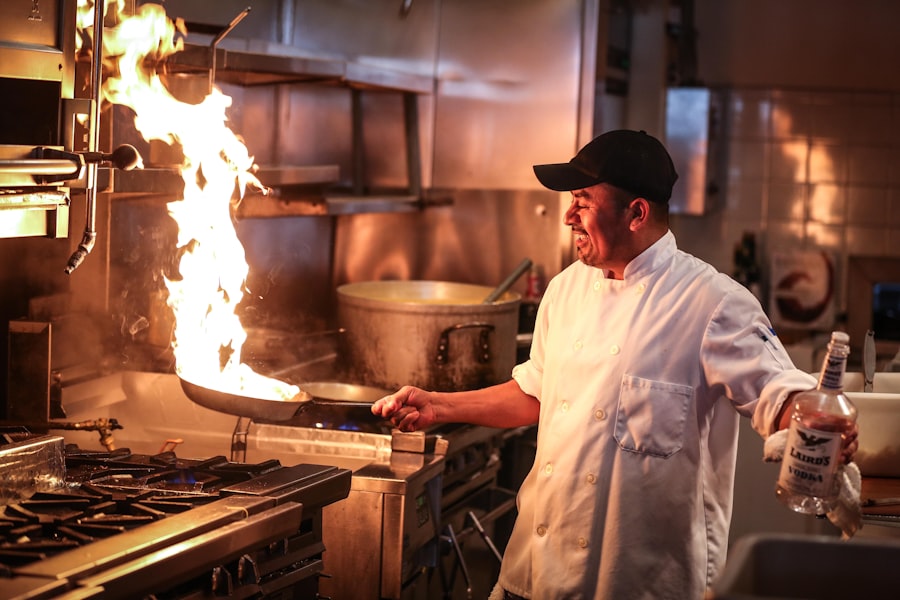
Day two: the mother sauces. Béchamel, velouté, espagnole, hollandaise, and tomate. The foundation of French cooking. I'd made all of them at home. I thought I understood them.
Reader, I did not understand them.
My béchamel was grainy. (I added the milk too fast.) My velouté was cloudy. (I didn't skim it properly.) My hollandaise broke. Twice. The second time, Laurent just looked at me with an expression of profound sadness and said, "Again. From the beginning."
At that point, one student — a retiree from Germany named Klaus — quietly left the kitchen and didn't come back for twenty minutes. I found out later he'd gone outside to scream into his hands. I understood completely.
By day three, I was genuinely questioning my life choices. I'd paid significant money to be yelled at in French (well, sighed at) while failing at tasks I thought I'd mastered years ago. My hotel room smelled like burnt butter. I dreamed about hollandaise breaking.
The Turning Point: Beurre Blanc
Day four. The sauce that changed everything.
Beurre blanc is deceptively simple: shallots, white wine, vinegar, butter. That's it. Four ingredients. And yet getting it right requires understanding emulsification at a level I'd never considered.
Laurent explained the chemistry. Why the reduction has to be acidic enough. Why the butter must be cold. Why you must agitate constantly but not too aggressively. Why the heat must be low enough to avoid separation but high enough to melt the butter smoothly.
I failed my first attempt. And my second. On my third try, something clicked. I stopped thinking about the individual steps and started feeling the sauce — watching its texture, sensing when it needed more agitation, knowing instinctively when to add the next cube of butter.
When I finished, Laurent tasted it, paused, and said: "Bon."
One word. After four days of criticism, it felt like receiving the Legion of Honor.
Day Five: Putting It Together
The final day was a complete meal. We worked in pairs. My partner was Ayumi from Tokyo, who had been silently excellent all week while I struggled publicly. She handled the fish. I made the sauces and sides.
Butter-poached sole. Beurre blanc (my nemesis, now my friend). Haricots verts. Pommes purée so smooth it could make you weep.
For two hours, everything flowed. The knife skills I'd drilled were automatic. The sauce came together without fear. When Laurent passed my station, he didn't sigh. He didn't correct anything. He just watched and moved on.
We ate our creations for lunch. The entire group — six students, Laurent, and his assistant Camille — sat at a long table in the back room. Bottles of Muscadet appeared. Laurent became almost friendly, telling stories about his years in professional kitchens, the famous chefs who reduced him to tears when he was young, why he now teaches instead of cooking.
"Every chef I know is broken a little bit," he said. "The good ones were broken early, so they could rebuild stronger. This week, I break you. But you will thank me when you cook at home and everything is better."
What I Actually Learned
It's tempting to reduce this to specific techniques. And yes, I now cut onions properly. My sauces don't break. My knife grip doesn't make professional chefs wince.
But the real lesson was about attention. About being present with food rather than just processing it. About slowing down enough to understand what's actually happening in the pan.
Home cooking since has been different. Not because I'm making elaborate French cuisine every night — I'm not — but because I approach even simple meals with more awareness. The texture of a sauce. The sound of a proper sear. The way vegetables respond differently depending on how they're cut.
Practical Information
Booking
L'Atelier de Chef Laurent doesn't have a fancy website. Email Laurent directly (happy to share the contact to anyone who asks via my contact page). Expect a response within a week. The five-day intensive runs Monday through Friday, 9 AM to 3 PM.
Cost
€1,800 for the full week. This includes all ingredients and a daily lunch made from your creations. It's not cheap, but it's roughly half the cost of comparable programs at the big-name schools.
Skill Level
The class assumes you can cook at a decent home-cook level. If you've never held a chef's knife, this will be overwhelming. If you've been cooking for years and want to understand why your food isn't quite restaurant quality, it's perfect.
Language
Laurent teaches in English but switches to French when demonstrating or frustrated. Functional French helps but isn't required. His assistant Camille translates when necessary.
Where to Stay
I recommend staying nearby in the 11th. The neighborhood has excellent wine bars and bistros for evening meals, and you'll be tired enough after class that you won't want to trek across the city.
Final Thoughts
A month after returning home, I made dinner for friends. Nothing ambitious — pan-seared chicken thighs, a simple pan sauce, roasted vegetables. But I made it with presence, with attention, with the lessons Laurent had literally yelled into me.
"This tastes different," my friend said. "What did you change?"
Everything, I thought. And nothing.
Considering a culinary course in Paris? Drop me a line — I'm happy to share more detailed recommendations based on your skill level and interests.